
Permanent Tooth Replacement — From a Dentist Who’s Seen Thousands of Utah County Smiles
A missing tooth does more than change the way you look. Over time, the jawbone beneath the gap begins to shrink, neighboring teeth can shift, and everyday moments — a meal with family, a photo at a graduation — start to feel more complicated than they should. Dental implants in Saratoga Springs, UT, offer a permanent solution that stops those changes before they compound. At Linrose Dental, Dr. Brent Bell has helped patients from across Utah County reclaim the full function and confidence of a complete smile. If you’re ready to stop putting it off, call 801-845-2235 or keep reading to understand exactly what the process — and the cost — looks like.
Meet Dr. Brent Bell, Your New Dentist in Saratoga Springs
Dr. Bell has been practicing comprehensive, conservative dentistry since 1997 and brings decades of experience, clinical judgment, and patient trust to Linrose Dental. A graduate of the Arthur A. Dugoni School of Dentistry at the University of the Pacific, he has built his 30-year career on integrity-driven care, thoughtful treatment planning, and a commitment to long-term oral health.
What Exactly Is a Dental Implant?
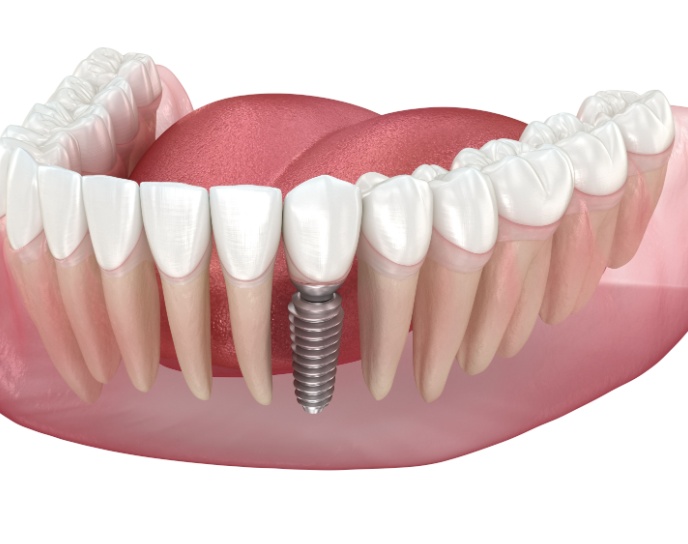
Most people picture a dental implant as a replacement tooth. It’s actually more than that — it’s a replacement root.
The system has three parts. First, a small titanium post is surgically placed into the jawbone where the missing tooth once was. Over the following months, the bone grows around that post in a process called osseointegration, creating a foundation that’s just as stable as a natural tooth root. Once healing is complete, a connector piece called an abutment is attached to the post, and finally, a custom ceramic crown — matched to the color and shape of your surrounding teeth — is secured on top.
The result isn’t a removable appliance or a prosthetic that relies on neighboring teeth for support. It’s a freestanding tooth that you brush, floss, and forget about.
Implants vs. Bridges vs. Dentures: Why Most Utah County Patients Choose Implants
When you lose a tooth, you have options. A bridge can be a reasonable short-term choice, but it requires permanently altering two healthy teeth to anchor the restoration — and it does nothing to address the bone loss happening underneath. A partial denture avoids that problem but rarely feels secure, and it still allows bone to recede. For patients who are good candidates, an implant is typically the most conservative long-term option: it touches nothing adjacent, it stimulates the bone, and it doesn’t need to be replaced on a decade-long cycle.
Am I a Good Candidate for Dental Implants?
Most adults who are missing one or more teeth are potential candidates. The key factors Dr. Bell evaluates at your consultation:
Sufficient jawbone density. The post needs solid bone to fuse with. If the bone has receded after years without a tooth, a bone graft can often restore enough volume to make implant placement possible. Dr. Bell uses 3D digital imaging to assess this precisely before recommending a path forward.
Healthy gums. Active gum disease creates a high-risk environment for implant failure. We address any periodontal issues first — healthy tissue is the foundation that everything else depends on.
Overall health. Uncontrolled diabetes, certain medications, and conditions that affect healing can complicate the process. Dr. Bell reviews your health history thoroughly and, when needed, coordinates with your physician.
Non-smoker (or willing to quit). Smoking significantly slows the bone-fusing process and roughly doubles the risk of implant failure. We work with patients who are actively quitting — just know that the timing matters.
Age 18 or older. Implants require a fully developed jaw, so we generally wait until facial growth is complete before placing a permanent implant in younger patients.
If you’ve been told before that you’re not a candidate — because of bone loss, age, or other factors — it’s worth a second opinion. Implant dentistry has advanced considerably, and solutions exist today that weren’t available five or ten years ago.
What Happens at Each Appointment
Step 1 — Consultation and 3D Imaging Your first visit isn’t a sales pitch — it’s a diagnostic appointment. Dr. Bell takes a 3D digital scan of your jaw to assess bone volume and maps out the precise placement angle for the post. He’ll review the findings with you the same day and walk through every step of the treatment plan, including timeline and cost.
Step 2 — Surgical Placement: The titanium post is placed under local anesthetic. The procedure typically takes under an hour for a single implant. Most patients are surprised by how manageable the experience is — and the majority return to work the following day. Dr. Bell provides clear written post-op instructions and is available if you have questions during recovery.
Step 3 — Osseointegration (The Healing Phase) Over the next three to six months, your bone gradually fuses with the titanium post. This is the longest part of the process, but most of it requires nothing from you other than keeping the area clean and attending a midpoint check-in. A temporary restoration can be placed during this period if the gap is visible.
Step 4 — Crown Placement Once Dr. Bell confirms full integration, a custom ceramic crown is secured to the abutment. He checks the fit, bite alignment, and color match before cementing it permanently. From this point forward, your implant functions and feels like every other tooth in your mouth.
How to Care for Your Implant
Right after surgery: Stick to soft foods for the first few days. Avoid rinsing forcefully or disturbing the surgical site. Take any prescribed medications as directed and follow the written post-op instructions Dr. Bell provides — they’re specific to your case, not generic.
Long-term care: Implants don’t decay, but the gum tissue and bone surrounding them absolutely can be affected by poor hygiene. Brush twice daily with a soft-bristled brush, floss around the abutment each day (a water flosser works well here), and keep your twice-yearly cleaning appointments at Linrose Dental. Dr. Bell will monitor the implant at each visit to catch any changes early.
Watch for these warning signs and call us promptly if you notice them: the crown feels loose or shifts when you bite, you feel pain or pressure specifically at the implant site, or you notice swelling or bleeding around the gum tissue. These don’t always mean something is seriously wrong — but they’re easier to address early.
Frequently Asked Questions
Many people with bone loss can still get implants, but it depends on the severity and location. Dr. Brent Bell can evaluate your jaw to see if a bone graft or a different placement technique might make you a candidate.
Signs of trouble include pain when biting down, swelling of the gums, or the implant feeling loose. If you experience any of these, call us immediately. Early intervention can often save the restoration.
The placement is performed under local anesthetic, so you won’t feel pain during the procedure — pressure and movement, yes, but not pain. Post-op soreness is real but usually mild, and most patients manage it with over-the-counter ibuprofen or acetaminophen. The discomfort typically peaks around day two and resolves within a week.
Plan for four to eight months total. The surgery itself is a single appointment under an hour. The bulk of the timeline is the osseointegration phase — the three to six months your bone needs to fully fuse with the post. Chair time over the entire course of treatment is usually three to five appointments.
Implant failure is uncommon — clinical data puts long-term success rates above 95% in non-smokers with healthy bone. Signs of a problem include pain when biting, visible loosening, or gum swelling around the site. If you notice any of these, call us immediately. Early intervention significantly improves outcomes. We will always review what happened and discuss your options honestly.

Making Dental Implants Affordable in Utah County
We offer several ways to fit implant treatment into your budget:
CareCredit — Low and no-interest payment plans that break the total cost into predictable monthly installments. Apply in the office or online before your appointment.
Cherry Financing — A flexible option with quick approvals and a range of payment term lengths.
Proceed Finance — Pre-qualify instantly without affecting your credit score. Competitive long-term rates for larger treatment plans.
Linrose Dental In-House Membership Plan — For patients without insurance, our membership plan provides significant discounts on treatment, including restorative work. Ask the front desk for the current plan details.
Staged treatment — If the full treatment cost is a barrier, Dr. Bell can sequence your care to spread costs over time while still getting the critical work done first.
We’re also happy to walk through your insurance benefits with you and identify any coverage you may not realize you have. Learn more about financing options.